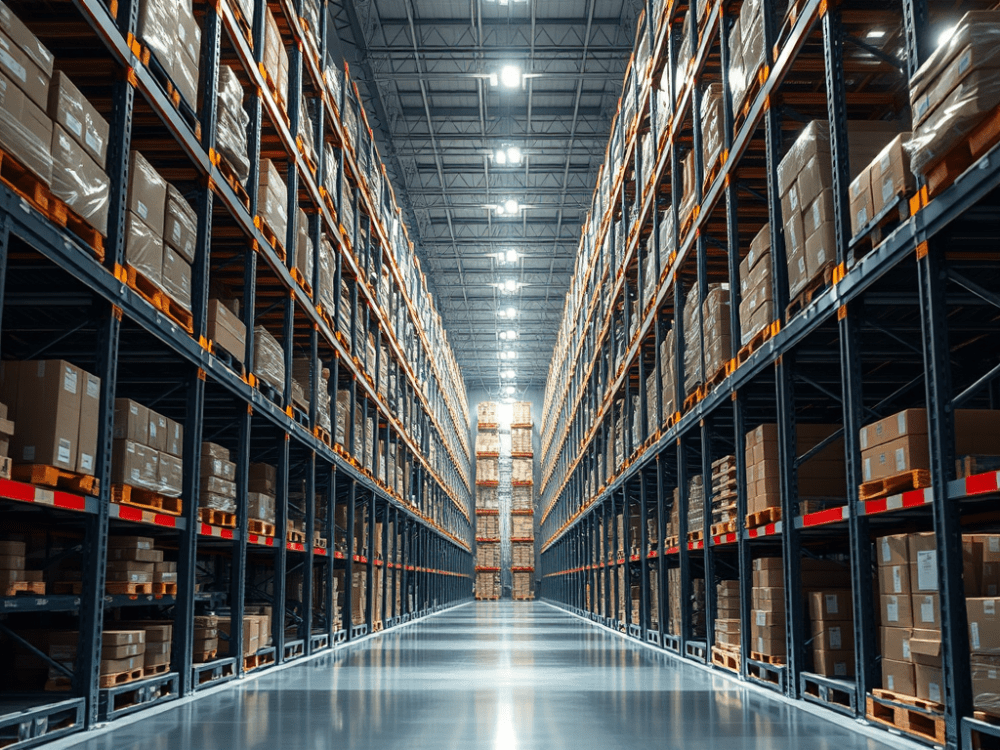
Artificial intelligence (AI) is significantly transforming traditional supply chains by enhancing efficiency, accuracy, and resilience across various industries.
While the top supply chain companies are putting millions of dollars to move their traditional infrastructure to robotic material handling equipment (MHEs), Internet of things (IoT) and automated ecosystems, should they be taking a close look at their strategy to incorporate AI and Larger language models (LLMs) to further their growth exponentially?
Big players are already experimenting to get ahead of the race, but the true winner, however, will be the one that resolves some of the complex core problems of the industry such as optimum inventory levels, planning for geopolitical developments or reducing transit time and bringing more visibility across the supply chain.
Key areas of disruption include:
1. Inventory Management and Demand Forecasting
AI enables companies to process vast amounts of real-time data, improving the accuracy of demand forecasting and inventory optimization. For instance, QXO appointed Ashwin Rao as its first Chief AI Officer to utilize AI for inventory management and demand forecasting, aiming to modernize the building products distribution sector.
2. Warehouse Automation
AI-powered robotics are revolutionizing warehouse operations by automating tasks such as sorting, packing, and inventory tracking. Walmart has unveiled AI-powered refrigerated warehouses designed for handling perishable goods, enhancing inventory tracking and operational efficiency. The company has also partnered with Symbiotic for AI powered software and fleet of autonomous robots. This modernization is aimed to achieve unprecedented advantage to make the supply chain warehouse operations more robust, resilient and optimized.
3. Logistics and Transportation
AI addresses logistics challenges, including vehicle routing and delivery optimization. According to MIT Sloan, AI can significantly improve logistics and supply chain management by optimizing vehicle routing and other logistical operations. Companies like DHL Express understand the need for route optimization and have started incorporating AI to develop prediction models and analyze the transit times for specific shipments and use this for planning courier load and route at service centers. AI powered software from Wise Systems, optimizes delivery stops on the basis of urgency(medical shipments), customer availability or minimal travel distance.
4. Supply Chain Resilience
AI enhances supply chain resilience by enabling real-time monitoring and predictive analytics, allowing companies to anticipate and mitigate disruptions. The World Economic Forum highlights that AI will protect global supply chains from major shocks by facilitating the digitalization of supply chain management and enabling the sharing of information in new ways. A world subject to disruptions due to geo-political or climatic changes and deadly pandemic, will need robust predictions and monitoring to make the supply chain risks minimal.
5. Retail and Customer Experience
In the retail sector, AI helps in adjusting supply chains rapidly in response to customer demands. For example, Shein utilizes AI to predict trends and analyze preferences, allowing for rapid adjustments in their supply chain to meet customer demands. Head of global strategy at Shein shared that more than 5000 suppliers of Shein have access to AI powered real time customer preferences which helps to optimize inventory and reduce waste.
Apart from Shein, companies like H&M and Zara, have started using Machine learning to analyze trends, optimize inventory levels and eventually cut down cost. A recent report (by McKinsey) predicts, apparel, fashion and luxury sector companies could reap up to $275 billion of operational profits.
AI is disrupting traditional supply chains by introducing advanced capabilities that lead to more agile, efficient, and customer-centric operations. Companies adopting AI technologies are better positioned to navigate the complexities of modern supply chain management and maintain a competitive edge in the marketplace.





 A Beautiful World!